
Home / Services / Occupational therapy

Part of our community rehabilitation

Occupational therapy

Occupational therapy is one discipline within CTC's community rehabilitation, delivered in clients' homes and communities across BC and Alberta. Our OTs help people take part in the activities that matter: moving safely at home, managing day to day, getting out in the community and, where possible, returning to work.

In Alberta? See occupational therapy in Calgary, including WCB-Alberta referrals.

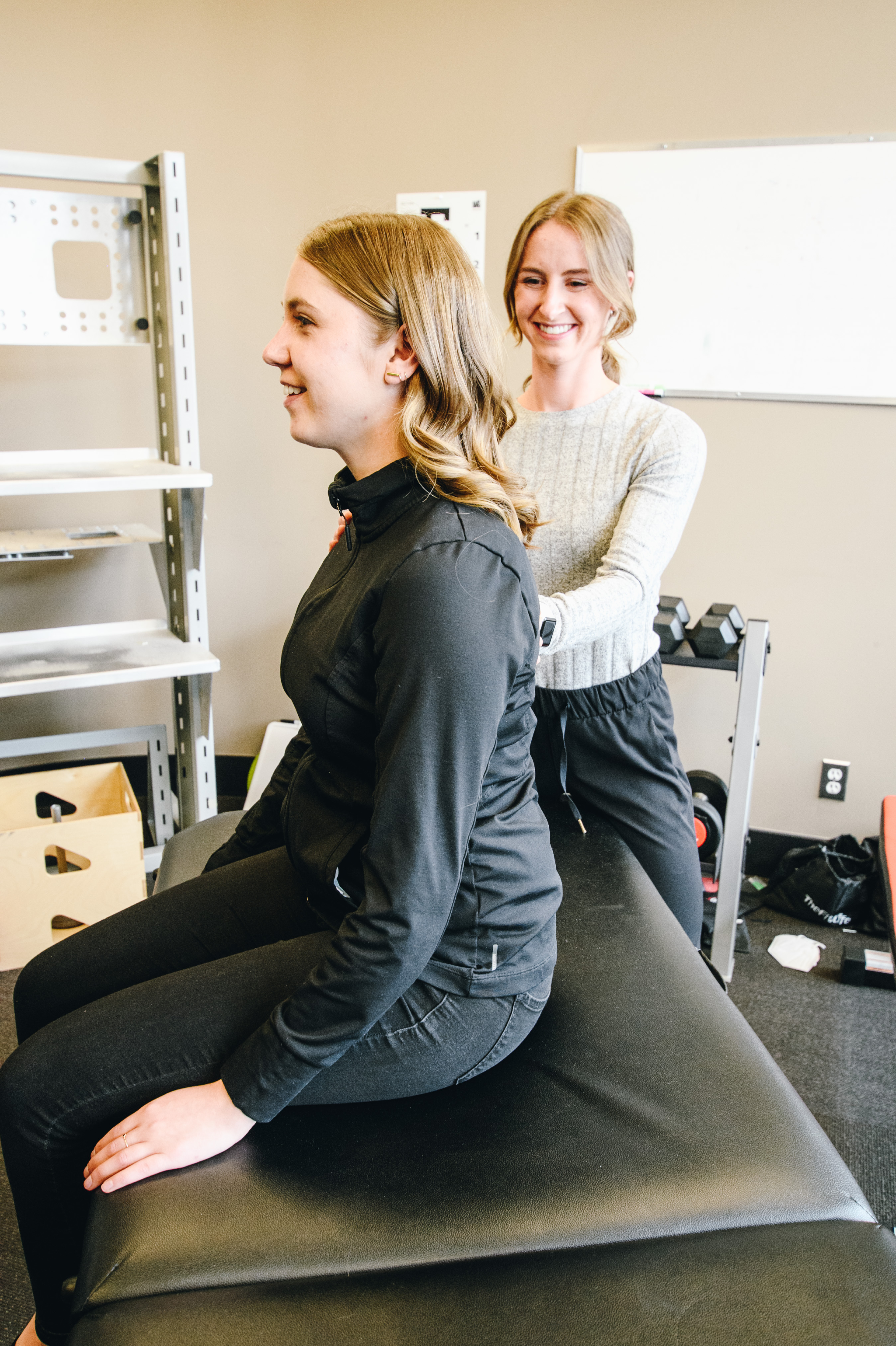
CTC occupational therapist and client smiling during a seated posture check

Occupational therapy at a glance

Who qualifies?

People who are struggling to manage at home, in the community or at work because of an injury, illness, chronic pain, a concussion or a mental health condition. Common referrals include workers and drivers recovering from a workplace injury or crash, people leaving hospital, and older adults who want to stay at home safely. In Alberta, our Calgary office offers occupational therapy, including WCB-Alberta referrals.

What is covered?

Occupational therapy is funded by WorkSafeBC, ICBC, Veterans Affairs Canada, long-term disability insurers, employers and legal counsel. For ICBC clients, OT is arranged and approved through the client's ICBC recovery specialist. The funder approves the services, so the client should confirm coverage with their case manager, adjuster or benefits provider. See fees and funding for more.

How referrals work

Send a referral by email to referrals@creativetherapyconsultants.ca, call 1-888-880-3222, or use our online referral form. We contact the client within 1 business day. The client gets their occupational therapist's direct phone number and email.

What to expect

Most first visits happen at home, though we can also meet at work, at one of our offices or online. The OT looks at how the client is managing day to day and sets goals and a practical plan with them. That plan can include equipment, home changes, strategies for pain or fatigue, or a graduated return to work. The OT keeps the funder, doctor and case manager up to date throughout.

What's included

OT services delivered in the home, in the community, at worksites and online.

Home and environmental assessmentsIn-home evaluations that identify barriers, with practical recommendations for layout changes, grab bars, railings, lighting and task simplification. OTs with specialised training in home modification work with contractors on ramps, handrails and bathroom changes.
Hospital discharge planningTransitions from hospital to home, including equipment setup, caregiver education, mobility planning and follow-up OT.
Equipment recommendations and trainingPrescription and instruction for mobility aids, adaptive tools and assistive technology, so clients can do more for themselves.
Wheelchair and power mobility assessmentsFit, positioning and seating systems for comfort, safety and pressure management, for manual and power wheelchairs and scooters.
Concussion and cognitive rehabilitationEvidence-based programs for memory, attention, executive functioning and visual and vestibular issues, with graded return to activity and, where appropriate, work.
Activation and exposure-based programsStepwise re-engagement in meaningful activities with symptom pacing and mental health support, including for clients living with PTSD.
Pain managementPractical help for living with persistent pain: pacing, activity and sleep planning, a plan for flare-ups, and a graded return to daily routines and work. Also offered as SHIFT, our small virtual pain group.
Return-to-work planningGraduated return-to-work plans built around the real job, agreed with the worker, employer and case manager, with modified duties and hours stepped up as tolerance improves.
Ergonomic assessmentsWorkstation and job set-up at the office, on site or at home, with adjustments made on the spot and practical advice to prevent strain before it turns into time off.

Who we help

Common reasons people see one of our OTs

Chronic painPacing, activity planning and practical strategies to do more with less flare-up.How OTs help with chronic pain
Injuries from work or a crashRehab and return-to-work planning for WorkSafeBC and ICBC clients after a workplace injury or motor vehicle crash.WorkSafeBC
Mental health and traumaFunction-focused OT for anxiety, depression and PTSD, alongside our counsellors where needed.OT for PTSD
Concussion and brain injuryStrategies for fatigue, concentration and memory, and a graded return to daily activities and work.
Aging at homeHome safety, falls prevention, equipment and home changes so older adults can stay at home safely.Aged care OT
Leaving hospitalDischarge planning, equipment and home assessments so the move home goes smoothly.

What to expect

How occupational therapy works at CTC

Occupational therapy is about getting back to the things you need and want to do: looking after yourself and your home, getting around your community and, where possible, working. Our OTs come to you.

A call within 1 business day

Once we receive a referral, your occupational therapist calls you to introduce themselves and book the first visit. You get their direct phone number and email.

An assessment where you live

Most first visits happen at home. Your OT looks at how you're managing day-to-day tasks, what gets in the way and what matters most to you. Visits can also happen at work, at one of our offices or online.

A practical plan

Together you set goals and a plan. That might include equipment or home changes, strategies for pain, fatigue or concentration, a graduated return to work, or a referral to a kinesiologist or counsellor on our team.

Progress you and your funder can see

Your OT keeps your funder, doctor and case manager up to date, so decisions about your care don't stall.

Occupational therapy after a concussion

Many people recover from a concussion within a few weeks, but some keep having headaches, fatigue, trouble concentrating, or sensitivity to light and noise. An occupational therapist helps you get back to daily life without making symptoms worse.

Who it helps

People still struggling with work, school, driving, screens or household tasks after a concussion or mild brain injury, often after a crash, a fall or a workplace injury.

What the OT does

Looks at how symptoms affect your day, then builds a plan for pacing, rest breaks, sleep, screen use and noise. Teaches practical strategies for memory, attention and planning, such as checklists and set routines.

A graded return to activity

Activities and work are added back in steps, guided by your symptoms. The OT can set up a graduated return to work and talk with your employer about temporary changes.

Working with your team

The OT keeps your doctor and funder up to date and can bring in kinesiology for graded exercise and counselling for anxiety or mood changes. ICBC, WorkSafeBC and disability insurers can fund concussion rehab when they approve it, so check with your funder.

Home accessibility assessments

A home accessibility assessment looks at whether your home still works for you after an injury, illness or change in mobility, and what needs to change so you can live there safely and independently.

What we look at

Getting in and out of the home, stairs, doorways and hallways, bathroom and toilet transfers, bed and chair heights, reach in the kitchen, and room to move with a walker or wheelchair.

What we recommend

Practical changes, from simple to major: grab bars, bath seats and raised toilet seats, stair rails, ramps, stairlifts, wider doorways or an accessible bathroom, plus the equipment to go with them.

Equipment and training

The OT checks that equipment fits you and your home, sets it up safely, and shows you and your family how to use it.

Reports for funders

The written report explains what is needed and why, so it can support a request to WorkSafeBC, ICBC, Veterans Affairs Canada, an insurer or a home adaptation program. Check with your funder about what they cover. For older adults, see aged care.

Need a wheelchair or custom seating? See complex seating and wheelchair prescription, available across the BC Interior from a Ride Designs certified OT.

Who refers

WorkSafeBC, ICBC, Veterans Affairs Canada and long-term disability insurers refer clients for occupational therapy, as do employers and legal counsel.

Home visits are available across multiple communities in BC and Alberta. Our OTs coordinate with case managers, HR and the client's other providers, and can provide program reports and outcome metrics.

"Occupational therapy is about helping people find practical solutions to everyday challenges. In Victoria, I have the opportunity to work with clients of all ages and backgrounds, tailoring therapy to meet their unique goals and circumstances."

Laurent P, Occupational Therapist, Victoria

Occupational therapy at home, start to finish

A typical referral to one of our OTs.

Example scenario

Home safely after a hip replacement

The situation

A 78-year-old in Kamloops was going home after a hip replacement. She lives alone, and the only bathroom is upstairs.

What we did

Our OT saw her at home the day after discharge, put in a raised toilet seat, tub transfer bench, grab bars and a second stair rail, and practised transfers with her and her daughter.

The result

She was showering and cooking on her own within two weeks and stayed out of hospital. Home support dropped to a weekly check-in.

A typical referral, based on our everyday work. Not a real client.

Frequently asked questions

Do you provide home visits?

Yes, across multiple communities in BC and Alberta.

Can OT help with anxiety?

Yes. Our OTs combine function-focused strategies with mental health-informed techniques.

Can you provide outcome data?

Yes. We provide program reports and metrics.

Do you support multi-site organizations?

Yes. We coordinate services across regions.

Can you work onsite?

Yes. We offer onsite and virtual options.

Do you coordinate with HR and case managers?

Yes. We liaise with everyone involved in the file.

How quickly do you contact the client after a referral?

We contact the client within 1 business day of receiving a referral. Each client gets their occupational therapist's direct phone number and email.

Which areas do you cover?

Our occupational therapists work from 12 offices across BC and in Calgary, and travel to rural communities, including Northern BC and the Kootenays.

How we work

The occupational therapy team behind your referral

Who provides the service

48 occupational therapists, each registered with the College of Health and Care Professionals of BC, or with the Alberta college for our Calgary office, and each named on the file with a direct phone number.

Depth of training

From our team's training records: 39 OTs trained in concussion management, 32 in exposure therapy, 32 in pain management, 23 in wheelchair seating, 21 certified in the MoCA, 16 in PTSD treatment including 12 in Prolonged Exposure therapy, 12 in cognitive rehabilitation and 10 in PGAP and in vestibular rehabilitation.

Reports and timelines

We contact the client within 1 business day of the referral. Assessment, progress and discharge reports are delivered within your funder's contracted timelines or the dates on your referral.

Complex and multidisciplinary files

A lead clinician coordinates the file and is your single contact. Clients seeing more than one of our clinicians are discussed at internal case conferences, senior occupational therapists and mentors consult on complex cases, and we join case conferences with adjusters, physicians and employers when asked.

Experience with similar files

CTC has worked on WorkSafeBC, ICBC, long-term disability, Veterans Affairs and WCB-Alberta files since 1986, in cities and in rural and northern communities.

See it in practice

Case studies from our clinicians, with identifying details changed.

Hospital to home after spinal cord injury

Equipment, home modifications, home care and power mobility after discharge.

Read the case study

Custom seating after spinal cord injury in rural BC

Wheelchair trials, funding, custom seating and adaptive paddling after GF Strong.

Read the case study

Ready to refer? It takes two minutes.